
Table of Contents
- How Dating Affiliate Marketing Works: From Traffic to Conversions
- What Is Dating Affiliate Marketing?
- How Does Affiliate Marketing for Online Dating Work?
- Dating Monetization Models
- What Counts as a Conversion?
- What Affects Dating Conversion Rates?
- Why Might One Dating Offer Not Work for All Your Traffic?
- How Do Smartlinks Help Monetize Dating Traffic?
- How to Evaluate a Dating Affiliate Program
- Common Mistakes When Running Dating Offers
- FAQ About Dating Affiliate Marketing
Dating remains an evergreen vertical because it can generate revenue year-round across virtually any GEO. However, competition is growing, advertising algorithms are becoming more sophisticated, and old approaches are gradually losing effectiveness. Simply finding a suitable offer and launching an ad campaign is no longer enough to make a campaign profitable. You need to understand audience behavior and take into account the characteristics of the traffic source.
In this article, we’ll explain how dating affiliate marketing works and trace the user journey from an ad click to a conversion. Want to learn how to run dating campaigns and which tactics can help increase your profits? We’ll cover monetization, offers, Smartlinks, and other tools for maximizing revenue.
What Is Dating Affiliate Marketing?
If you’re researching dating affiliate programs, it helps to understand how the dating affiliate model works, what kinds of offers are available, and how a CPA network can help you find offers suited to your traffic.
The dating vertical covers the promotion of online dating websites and apps. An affiliate marketer sends users to an advertiser’s page and earns a payout when they complete a specified action, most often registering. That’s the basic idea behind a dating affiliate program. Before going into more detail, let’s look at the main categories of dating offers.
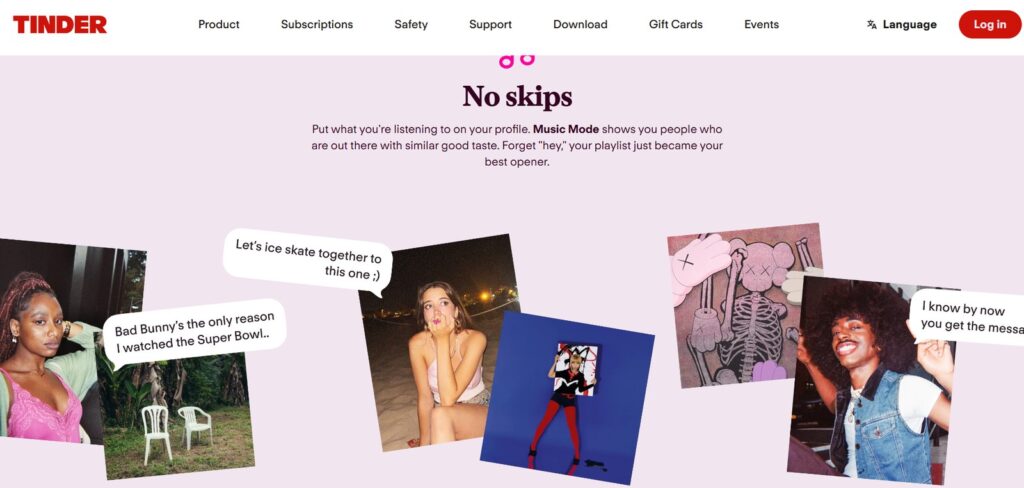
- Mainstream dating: services for chatting, friendship, relationships, and finding a long-term partner, such as Tinder. These offers have few advertising restrictions and can be promoted through a wide range of traffic sources.
- Adult dating: dating services intended for adults aged 18 and over. This segment can be more profitable, but it is also harder to promote. Facebook and other platforms restrict this type of advertising, so some affiliates resort to cloaking to get around moderation, although this violates platform rules and puts ad accounts at risk.

When choosing a dating affiliate program and offer, consider how long the product has been on the market and how much demand it has. If an offer has been heavily promoted in a particular GEO for a long time, much of its audience may already have been reached, and repeat conversions may not be paid. Geography matters, too: some markets are saturated with dating ads, while competition is considerably lower in others.
How Does Affiliate Marketing for Online Dating Work?
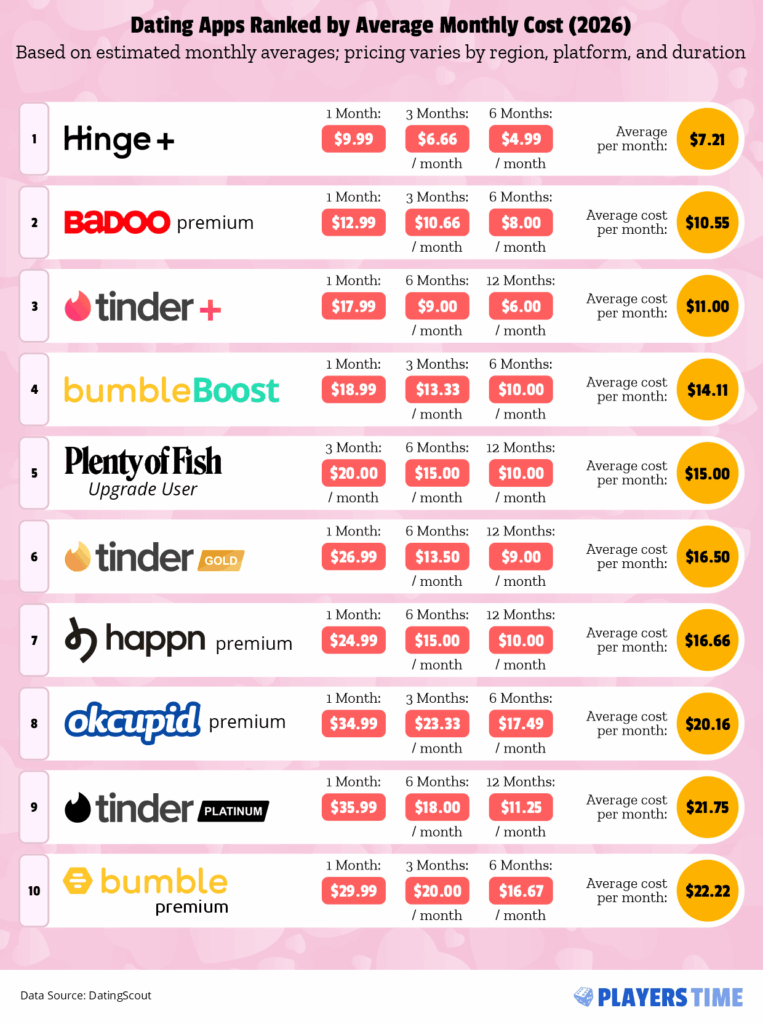
There are thousands of dating websites and apps, and most make money through paid features. The model will be familiar to anyone who has used Tinder or a similar service. Basic features are free, but users who want more visibility or a higher profile ranking usually have to pay. This creates earning opportunities for affiliates promoting dating sites: the average price of paid features across the 10 most popular apps exceeds $15.
In this process, the affiliate acts as an intermediary between the dating platform and its potential customers. They attract users and receive a commission for the action specified in the offer terms. This could be a registration, an email-list subscription, or an in-service purchase. Traffic can be sent directly to a landing page or through a pre-lander designed to look like the profile of someone looking to connect. The promotion method depends on the offer and traffic source. Affiliates can join a dating affiliate program directly or find relevant dating CPA offers through a CPA network. A specialist dating affiliate network can make it easier to compare offers and test different audiences.
Dating Monetization Models
Dating affiliate programs use different payment models, so compare the terms and conversion requirements before choosing an offer. The three most common are CPA, PPL, and Revenue Share. Let’s look at each in more detail.
- CPA (Cost Per Action): the affiliate receives a payout when a referred user completes a specified action. The requirements depend on the offer. An advertiser might pay when a user completes a dating profile, uploads a photo, or performs another activity after registering.
- PPL (Pay Per Lead): the affiliate is paid for each lead generated. In dating, this model usually comes in two forms:
- SOI (Single Opt-In): the user only needs to register for the lead to count and the affiliate to get paid. Because the requirement is minimal, payouts are usually lower.
- DOI (Double Opt-In): after registering, the user must also verify their account by phone number or email. These leads are more valuable to the advertiser because the extra verification step helps filter out bot traffic.
- Revenue Share (RevShare): the affiliate receives a percentage of the revenue generated by referred users. For example, if a dating-site subscription costs $20 per month and the RevShare rate is 50%, the affiliate earns $10 when a referred user pays for the subscription. This model works best for long-term campaigns, and audience quality is especially important.
CPA is considered the simplest and most common model, but the other models can be just as worthwhile, each with its own specifics. With RevShare, it is important to focus on customer lifetime value and traffic quality. A user might register today and continue chatting, buying subscriptions, and making repeat payments, or they might lose interest and never pay. Affiliates also need sufficient funds to keep advertising running until their campaigns become profitable.
What Counts as a Conversion?
A conversion most often means a user registration, but the exact requirements depend on the dating affiliate program. With SOI, filling out a form and creating an account is enough. With DOI, the user must also verify their email address or phone number after registering. The more steps a user has to complete, the harder it is to generate a conversion, and the higher the payout usually is.
SOI is one of the most popular and straightforward options for launching a dating CPA campaign. Ads can be set up and launched relatively quickly, but the payout per lead will be lower than for offers that require users to verify their details. Before launching, assess how difficult it will be to achieve the target action and calculate the maximum affordable cost of acquiring traffic. If the average CPC for a source is higher than the payout and you cannot diversify your traffic, it may be better to skip the offer. The right payment model depends on the source and audience quality. Comparing click costs across sources helps you estimate the risks in advance.
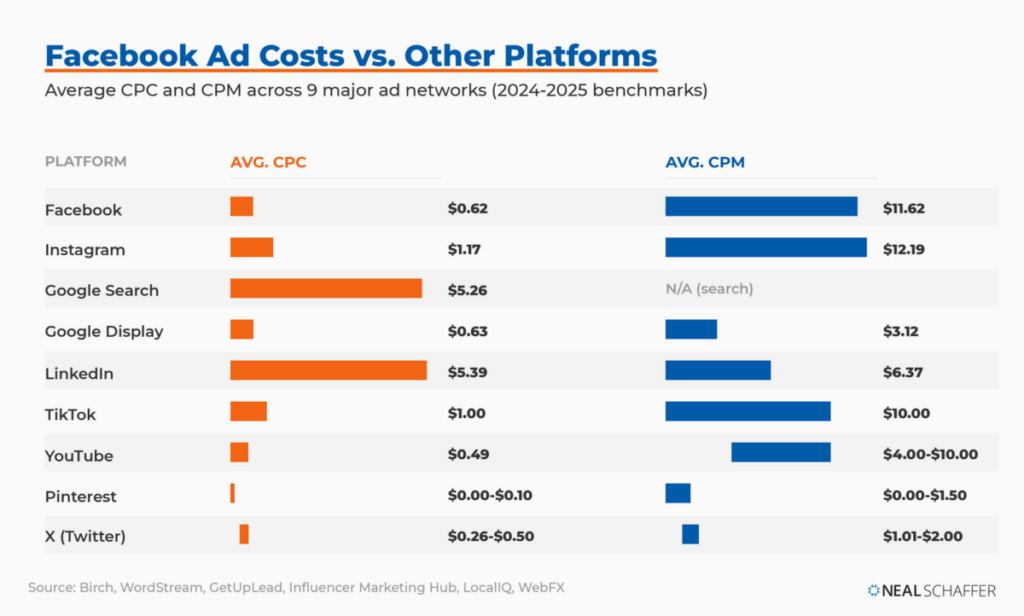
Beginners often choose push traffic because it is relatively easy to launch and clicks are inexpensive. Push-notification clicks can start at $0.003, while popunder CPMs can start at $0.50. However, traffic from these ads may not be high-quality enough for a RevShare model. It is also important to check which traffic sources the dating affiliate program actually allows.
What Affects Dating Conversion Rates?
Dating ad clicks are often driven by emotion: a user likes the creative, is drawn in by a story, or responds to the right trigger. But a high CTR alone guarantees nothing. After clicking, users need to understand where they have landed and what to do next. Unnecessary steps, an overloaded pre-landing page, confusing mechanics, or overly aggressive advertising can all reduce conversions. A short path to registration, a smooth warm-up, and an appealing landing page design tend to work best.
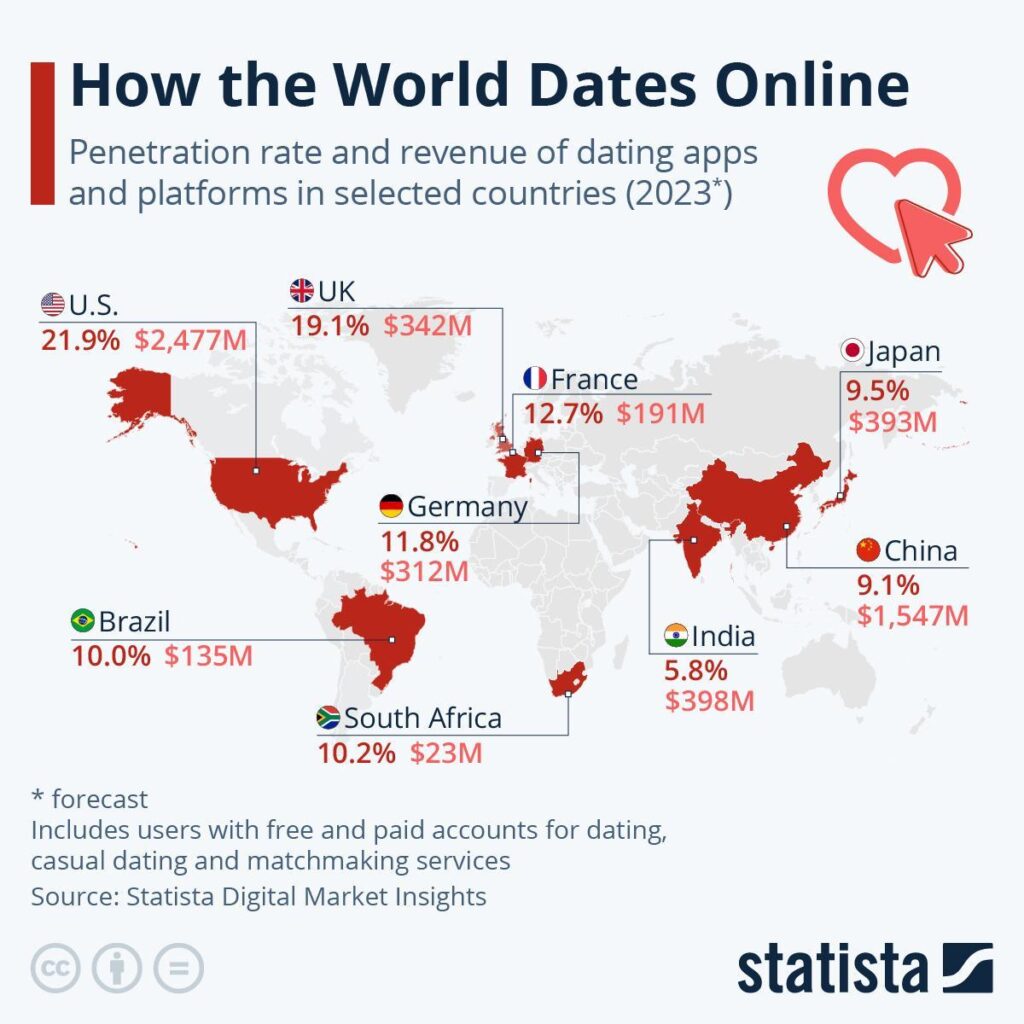
The audience’s purchasing power is another key factor. You can estimate it partly by looking at the market size and how much users in a given country spend on dating services. Higher purchasing power usually also means more expensive traffic. The US, for example, is considered a top GEO, but it is also competitive and challenging. Depending on the source, 1,000 clicks there can cost between $28 and $195; traffic at the lower end of that range is more likely to be lower-quality and less engaged. The statistics below show the countries where people spend the most on dating services.
Demographics also affect CR. Men register for dating apps more often than women, while middle-aged users may be more actively looking for a partner than younger users.
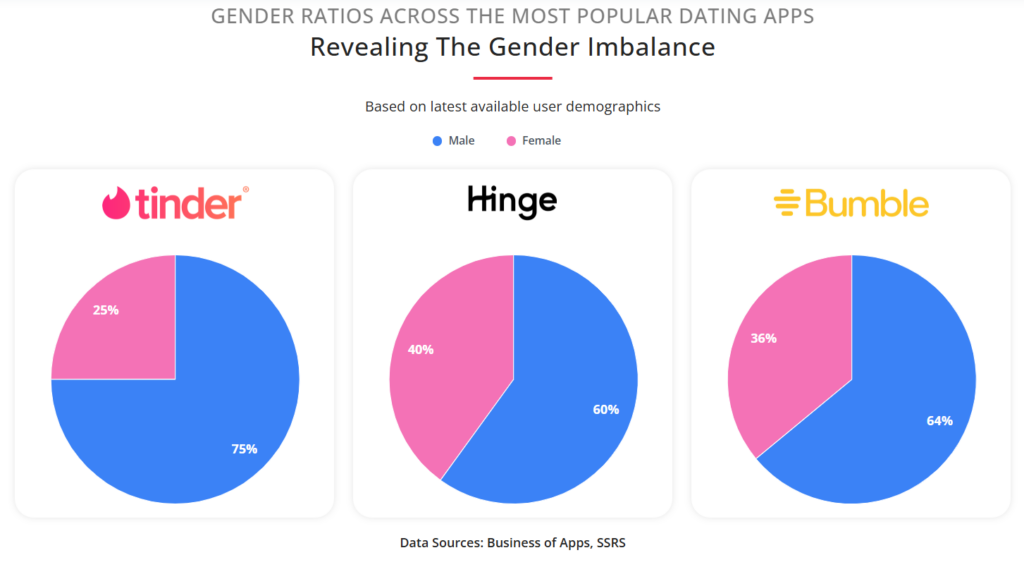
These patterns are worth considering when preparing creatives, but broad statistics should not be applied to every GEO. Audience composition and behavior need to be checked separately for each country you target.
Why Might One Dating Offer Not Work for All Your Traffic?
A single dating offer rarely performs equally well when targeting a broad audience. First, users’ ages and interests vary by product. One app may mainly attract younger users, while another appeals to middle-aged people with very different motivations. Before launching, research the audience for the specific offer and tailor your creatives, messaging, and traffic source accordingly.
Second, performance can differ significantly between mobile and desktop. Add the characteristics of each traffic source, and it becomes clear that the same offer and ad settings will not deliver equally strong results everywhere. Creative fatigue can also become a problem: if you never refresh your ads, users get used to seeing them, frequency rises, and clicks become more expensive. An ad that delivered a high CTR yesterday may eventually wear out and generate more expensive conversions. Smartlinks can help monetize dating traffic in this situation. Instead of sending everyone to one offer, an algorithm distributes traffic across available offers based on its characteristics. Affiliates no longer have to choose one product manually for the entire audience and can focus on traffic quality and regularly refreshing creatives.
How Do Smartlinks Help Monetize Dating Traffic?
For publishers exploring dating traffic monetization, a dating Smartlink can simplify offer selection and help monetize traffic from different sources. As part of a broader traffic monetization strategy, Smartlinks can route users to offers that better match their traffic characteristics.
If traffic comes from several sources or GEOs, it is almost impossible to find one offer that suits the entire volume. You can split campaigns, manually test dozens of products, and constantly monitor where CR is dropping. Or you can bring suitable offers together in a Smartlink and distribute users among them automatically.
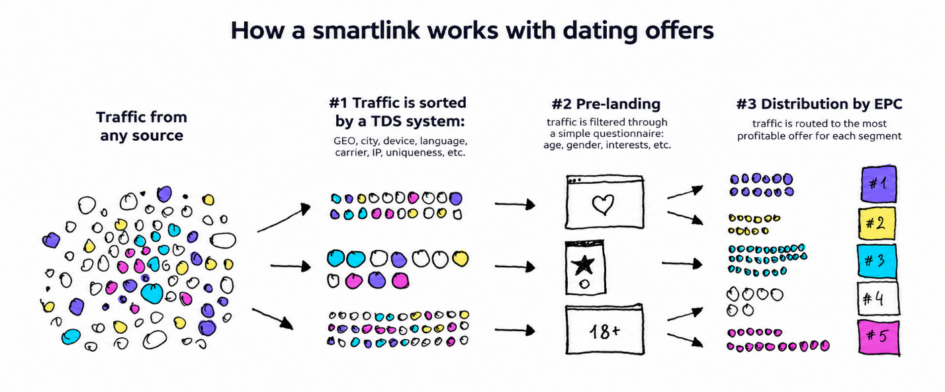
A Smartlink is a smart URL that contains multiple offers. For publishers looking for a Smartlink affiliate solution, a Smartlink affiliate network provides access to multiple offers through one link. A dating Smartlink CPA network or dating Smartlink network can be especially useful when working with mixed dating traffic. After a click, the system evaluates the traffic parameters and sends the user to the most suitable offer. The basic workflow is shown in the image below.
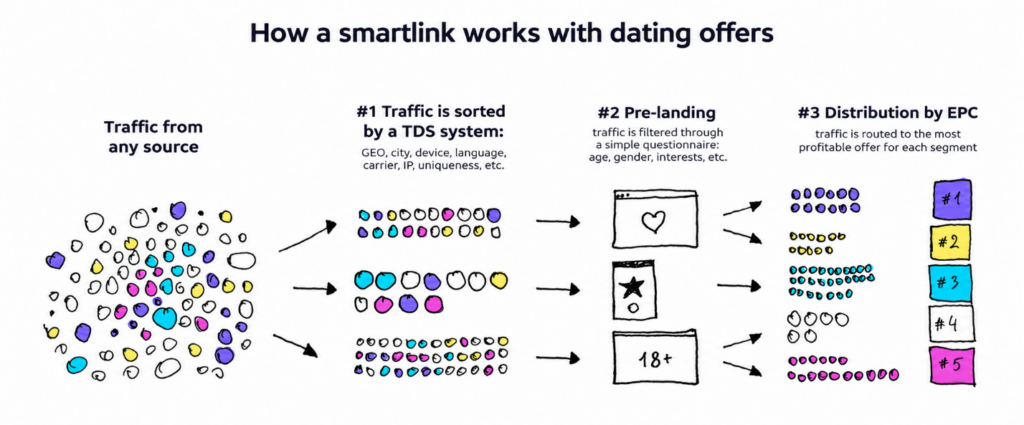
Instead of testing offers one by one, an affiliate can use a single link for mixed traffic from social networks, ad networks, chats, push notifications, native ads, and other sources. Adverten Smartlink can also help you get extra revenue from traffic you already have: users who do not convert through the primary campaign can be directed to other relevant offers in the dating CPA network. This approach can be useful:
- when entering a new GEO where you do not yet know which product will appeal to the local audience;
- for traffic that did not convert in the main campaign;
- when working with mixed traffic from different sources;
- when you do not want to switch offers manually every time CR changes;
- when scaling, so that you do not send all your traffic to one offer and saturate it.
A Smartlink does not solve traffic-quality problems on its own. It is one tool within a broader website traffic monetization and mobile traffic monetization strategy, not a substitute for quality traffic and relevant creatives. Creatives, traffic sources, and audience insight remain the affiliate’s responsibility. What a Smartlink does is remove the guesswork of choosing which of dozens of dating products best suits each audience segment, and that is one of the key advantages of working with Adverten.
How to Evaluate a Dating Affiliate Program
When comparing dating affiliate networks, best dating affiliate programs, or the best dating CPA network, look beyond the payout and check offer quality, approval rates, tracking, and support. The right dating service affiliate option depends on your traffic source, GEOs, and audience.
Start by looking at the program’s offers. Its portfolio should include strong offers that are already performing well. The wider the selection, the easier it is to test different GEOs and audiences without switching networks after every unsuccessful launch. A high payout may look attractive, but a $5 offer can easily underperform a $2 offer if its conversion rate is lower or the advertiser approves fewer leads. Experienced affiliates therefore assess several metrics for each offer:

- Hits: total number of requests.
- Uniques: unique users who clicked your affiliate link for the first time.
- Clicks: total number of visits generated.
- Ratio: the relationship between two performance metrics, such as registrations and paid subscriptions.
- Conversions: the number of users who completed the target action.
- EPC (Earnings Per Click): average earnings per click.
- EPM (Earnings Per Mille): revenue per thousand impressions.
- Adjustments: the share of conversions that were rejected and will not be paid.
- Revenue: total earnings from the offer.
Review as much data as possible before deciding which offer has the strongest profit potential.
Common Mistakes When Running Dating Offers
Even a strong offer may fail to deliver the expected conversion rate if the problem lies in the campaign setup. Three mistakes in particular can significantly hurt CR.
The Creative Promises One Thing, but the Landing Page Shows Another
If an ad promises real people nearby who want to meet, but the user lands on a generic quiz, trust can quickly disappear. The same applies when the creative has little to do with the landing-page content. A user clicks expecting to start meeting people quickly but is instead faced with five screens of questions and no clear explanation of why they need to complete them. The fewer obstacles between the click and registration, the more likely a conversion becomes.
The Landing Page Is Not Optimized for Mobile
Mobile traffic accounted for more than 50% of dating traffic in 2025, so smartphone optimization has a direct impact on campaign performance.
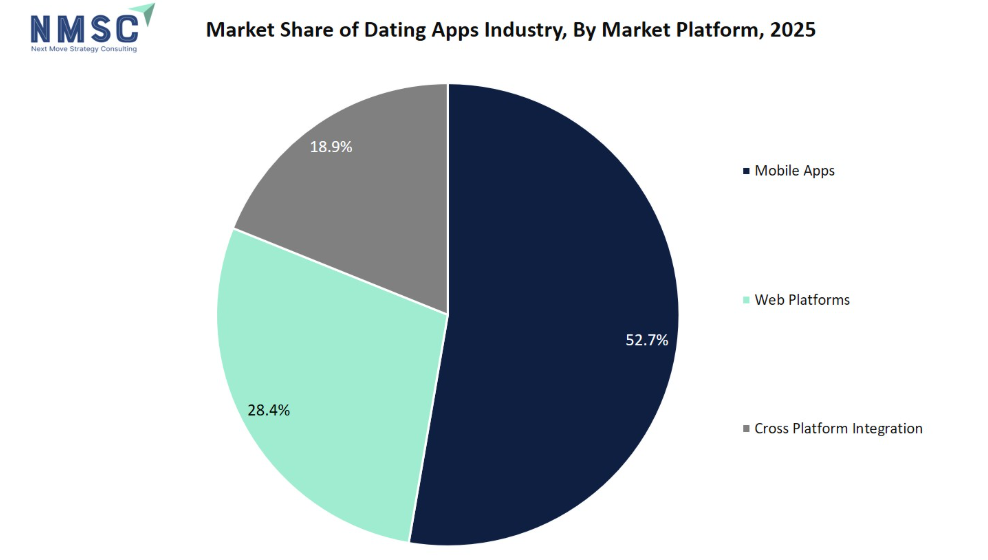
Even a compelling creative and a well-targeted audience cannot save a campaign if the landing page is difficult to use on a phone. Common issues include:
- heavy landing pages that take too long to load;
- small text and interface elements that are hard to tap;
- long or confusing registration forms.
Before you monetize your website traffic, test the funnel on a phone and go through the entire user journey yourself. Fix any issues before launching the campaign so you do not lose conversions.
Using the Same Approach for Every GEO
The same dating offer might convert well in South America and fail in Eastern Europe, even when payouts are similar and the purchased traffic appears comparable in quality. The reason often lies in the audience itself and its attitudes toward dating. Light flirting may work better in one market, while users in another may be looking for serious relationships; elsewhere, dating apps may be viewed more as entertainment. Copying the same creative and messaging from one GEO to another without adapting them is risky. You may need to change not only the visuals but also the angle and the entire journey from first ad exposure to registration.
FAQ About Dating Affiliate Marketing
Which payment models do dating affiliate programs use?
The main models are CPA, PPL, and Revenue Share. Publishers comparing CPA dating offers or CPA dating networks should also review the conversion criteria and traffic restrictions. PPL includes SOI, where a simple registration is enough, and DOI, where the user must complete an additional verification step by confirming their phone number or email address.
How much can you earn from dating websites?
Earnings depend on traffic costs, GEO, the offer, the payment model, and the quality of the audience you attract. A high payout alone does not guarantee profit. You also need to account for CR, EPC, approval rate, and expected advertising costs.
Should you use a Smartlink for dating campaigns?
A Smartlink is worth considering because it brings multiple offers together under one link and can help improve monetization. After a click, the algorithm analyzes traffic parameters and directs the user to a suitable offer. This is useful when working with multiple GEOs, traffic sources, or a mixed audience.
What has the biggest impact on dating conversions?
CR is affected by how well the creative matches the landing page, funnel length, mobile optimization, the GEO, and audience characteristics. The same offer and creative can perform differently depending on the country and traffic source.
Why has a dating offer stopped converting?
Possible reasons include creative fatigue, a change in the audience, or advertising saturation in a particular GEO. Also check the landing page, its loading speed, and the entire user journey from click to registration.